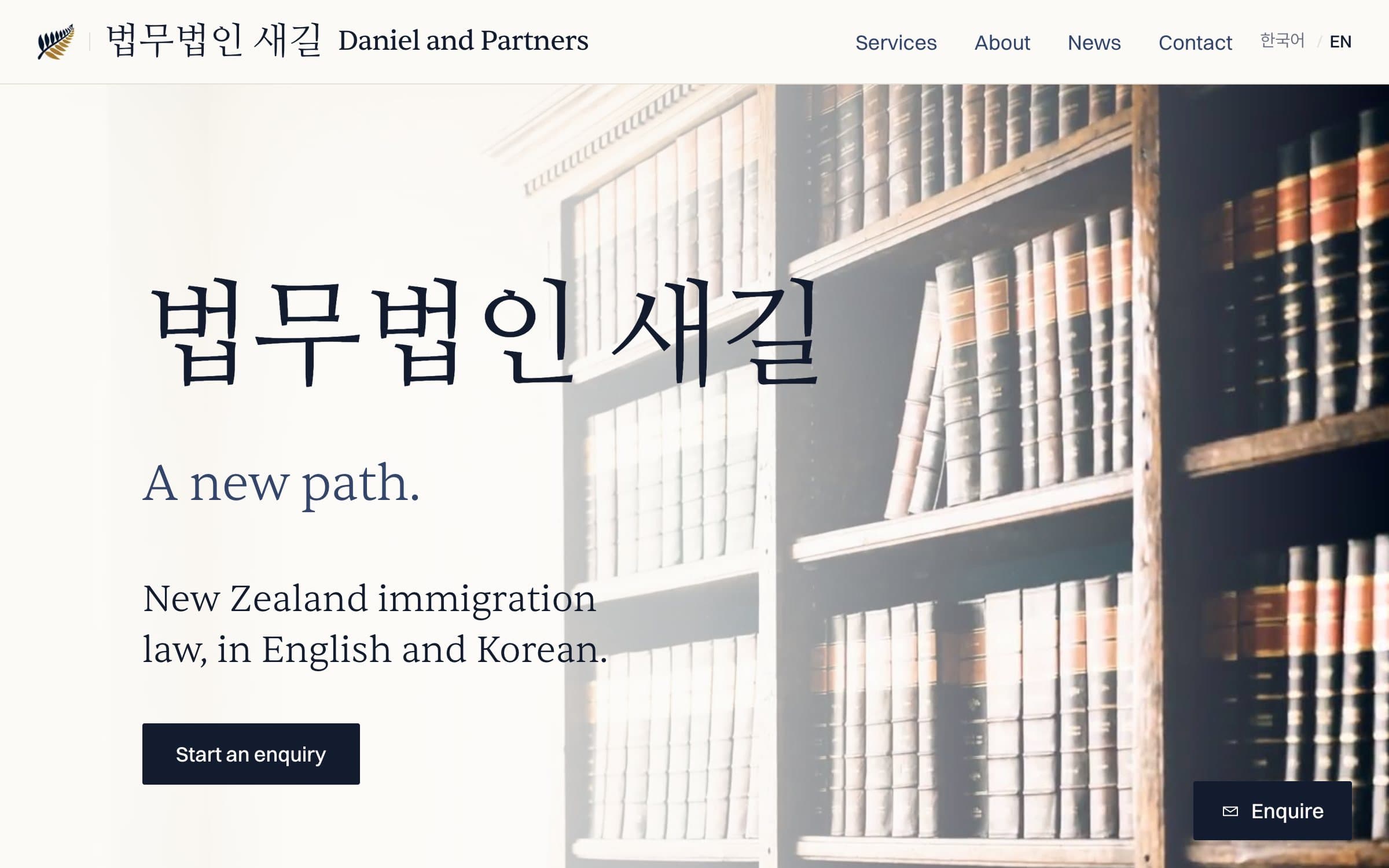
A New Zealand immigration practice, online in Korean and English.

A website that explains what you do, is easy to keep current, and turns the people who find it into enquiries.
Most small business websites fail at one of three things: they are slow, they say nothing a customer needed to know, or they went stale the week after they launched because changing them meant emailing someone.
A site built here is meant to be run by the person who owns it. The parts that change — hours, prices, photos, services, a notice that you are closed next week — are yours to change, from a phone, without asking. The parts that do not change are written once and written properly.
And it is built to be found. Page titles that match what people search, descriptions worth clicking, a sitemap submitted to Google, and structured data that tells a search engine — and increasingly an AI assistant — what your business is, where it is, and what it does.
What you do, who you are, where you are, what it costs if you are willing to say, and how to get hold of you. Written in plain language, not in the language of a brochure.
Emailed straight to you. It asks enough that your reply can be useful, and it never wipes what someone typed if the send fails.
Most of your visitors are on a phone, often on mobile data, often standing outside. That is the case the site is designed for, not an afterthought scaled down from a desktop layout.
Titles, descriptions, a sitemap, and local business markup so you can appear in local results and be described correctly when someone asks an assistant for a recommendation.
Not a mockup and not a list of logos — the systems described above, running, with a way in.
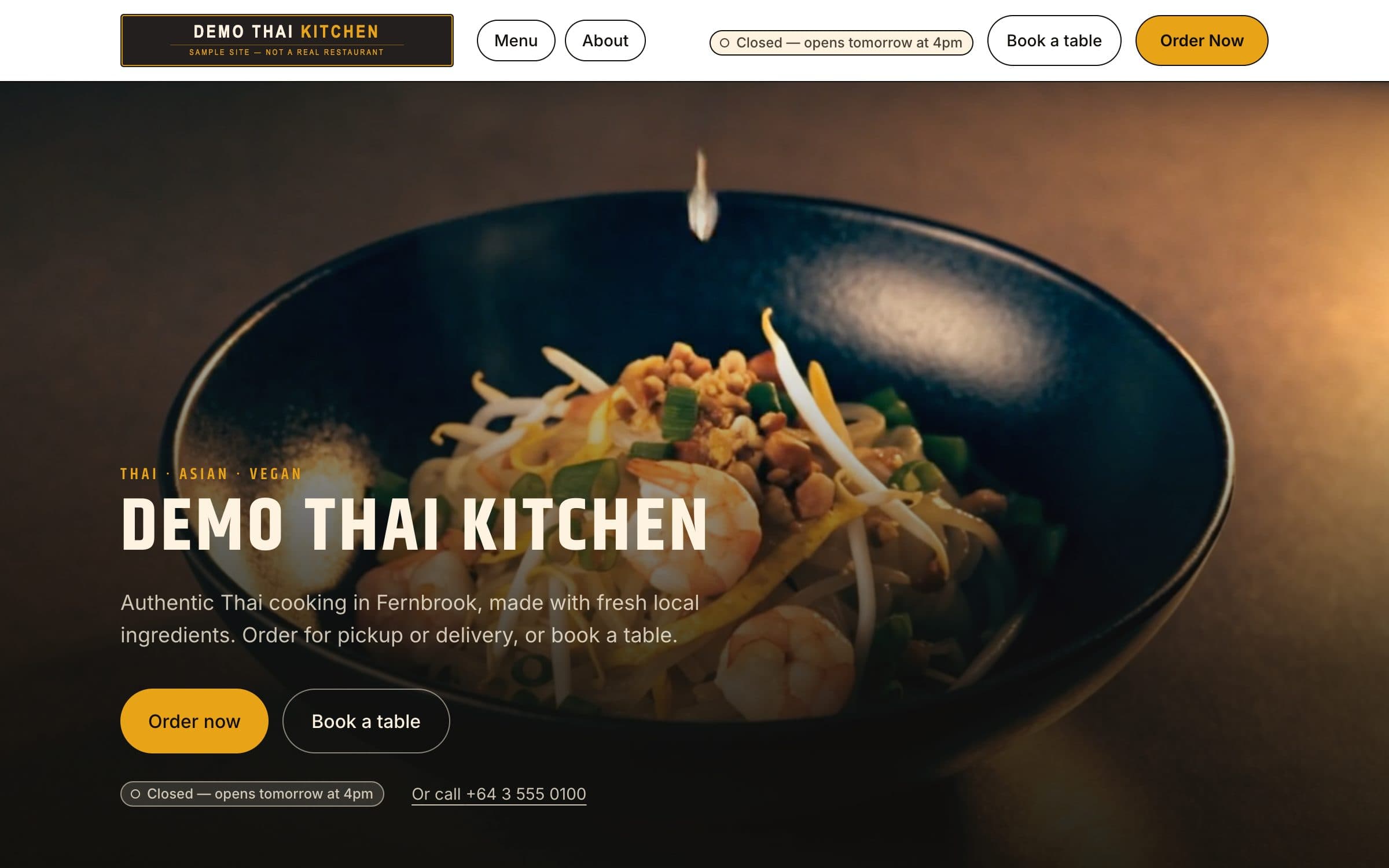
Any small business with something to explain and customers to reach — the published work so far is an immigration practice and a restaurant, which have almost nothing in common except that both needed the site to do a job rather than sit there.
Sometimes. If the problem is copy, speed or the fact that you cannot edit it, that is often worth looking at before rebuilding. Send the address and you will get an honest answer about which one it is.
A conversation about what the business actually needs the site to do. Not a brief form — a conversation. Everything else follows from that.
The rest of the work